Posts Tagged ‘autism’

Exercises can help children with autism improve focus, balance, motor skills

March 18, 2011

Exercises and yoga poses can help children with autism and other developmental disabilities gain confidence, develop better coordination, and improve motor skills.

Improvements in balance and motor skills often go hand in hand with progress made in cognitive function and academic achievement.  Exercising and playing sports also gets more oxygen to the brain, helps kids stay in shape, improves sleep habits, and can improve relaxation and decrease aggressive behaviors.

For children with autism, copying a facilitator’s actions can lead to improvements in the ability to imitate, which is often lacking in kids on the spectrum.

To read the rest of my article on Examiner.com, click here.

This blog is brought to you by http://www.mikeneedsakidney.com/.  Please consider donating.  Thanks.


Using puppets for kids with autism can be the highlight of play dates

February 19, 2011

Lydia Ladybug, Dino the Dog, Leo the Lion, and Roger Rabbit pose for a photo. Photo by Mike Frandsen.

Playing with puppets is an excellent way for children with autism and other special needs to practice spontaneous, imaginary, and symbolic play, which can help bring children who think concretely into the world of abstract concepts and ideas.

Play dates can enhance social skills, emotional awareness, and learning, and symbolic play can take learning a step further by enabling kids to take part in scenarios to help them understand how the world works.

Children with low verbal skills often undergo intensive verbal behavior analysis, speech therapy, and even oral motor exercises.  These therapies are often successful to various degrees, but playing with puppets can also bring out speech development and help kids use what they have learned in a natural environment.

To read the rest of my article on Examiner.com, click here.

This post has been brought to you by www.mikeneedsakidney.com.

Play date activities for children with autism spectrum disorders

January 28, 2011

Participating in play dates can help children with autism gain invaluable social skills.  The best way for children on the autism spectrum to learn how to manage their emotions and make friends is to practice those skills over and over with their peers.

A sample list of play date activities designed to improve social-emotional, play, cognitive, and motor skills is below.  The description of ideas is just a guide.  The list of potential games, sports, and other activities is endless.  The list below includes activities that in some cases require a minimum level of education and communication.

Activities should be customized to the interests and needs of students.  A list of ten or so major activities can be given to kids who should have some leeway to take turns choosing activities.  In a two-hour play date, usually about six activities can be accomplished.

To read the rest of my article on Examiner.com, click here.


15 articles from 2010 every parent of a child with an autism spectrum disorder should read

January 15, 2011

One of the major educational and therapeutic trends in autism in 2010 was an increase in meaningful, developmental autism therapies that incorporate social, emotional and cognitive skills to enhance traditional behavioral methods.

On the research front, scientists increasingly recognized and acknowledged that autism is largely environmental and not solely genetic.

And while devastating tragedies occurred, out of those heartbreaks came greater awareness and safety measures that will ultimately save the lives of vulnerable children.

Examiner.com‘s Mike Frandsen takes a look back at some of the articles from 2010 that reflected critical issues in the world of autism.

Mason Alert would help prevent wandering, drowning deaths of kids with autism

Mason Alert to be combined with Take Me Home program to prevent autism wandering

Dr. Stanley Greenspan dies, founded Floortime and developmental approaches to autism therapy

Teaching, coaching sports, playing with children with autism: rewarding, but also a whole lot of fun

Play dates for kids with autism can enhance social skills, emotional awareness, and learning

Using humor, puppets in play therapy can enhance social, communication skills for kids with autism

Understanding and managing emotions are important life and social skills for children with autism

Sports and exercise for children with autism can improve social and cognitive skills

Top 10 mistakes, lessons learned from therapy programs for children with autism spectrum disorders

Landrigan calls for more research into pesticides, toxic chemicals, environmental causes of autism

Autism advocate Lyn Redwood discusses mercury vaccine controversy, chelation, treatment and recovery

Interview with Dan Olmsted, Mark Blaxill: ‘Age of Autism-Mercury, Medicine, and a Manmade Epidemic’

Congress: CDC misled public about Washington, D.C. lead in water crisis, lead was toxic for some

Facilitated Communication (FC) enables non-verbal people on autism spectrum to communicate by typing

HHS, NIH and other federal agencies should hire more employees with autism and other disabilities

For the rest of the article on Examiner.com, click here.

Read books with children with autism during play dates

December 4, 2010

One of the best activities to do with children with autism during play dates is to read books, as long as it’s done in an engaging, interactive way.  At a recent play date I facilitated, I brought a stack of books from my collection – books that I thought would be most likely to be big hits.  Then I let the kids choose which ones they were going to read.  To my surprise, they chose “The Cat in the Hat” by Dr. Seuss and “Where the Wild Things Are” by Maurice Sendak, which were my favorite books when I was very young.  It turned out great.  To see the whole list of books that I brought (those about emotions, social skills, humor, etc.),  ones that didn’t make the cut, plus links to other articles about books for children with autism, click here for my article on Examiner.com.

Mason Alert Take Me Home program will help prevent autism wandering, save lives

November 25, 2010

Mason Allen Medlam

Last July, 5-year old Mason Medlam drowned in a pond after wandering from his home.  He had autism.  Wandering and drowning are leading causes of death for children with autism, who are often unaware of danger, fascinated by water, and unable to communicate.

Mason’s family has proposed the Mason Alert, a national registry of people with autism and other disabilities that would help authorities find them if they go missing.

Plans are underway for the Mason Alert questions to be integrated with an existing police program for autism wandering safety, the Take Me Home program, which contains photos and contact information for approximately 500 children and adults with autism and other disabilities in Pensacola, Florida.  Approximately 250 police departments across the U.S., Canada, and England are using the Take Me Home program, which is free to any police departments that want to use it.

The information in the Mason Alert includes not only photos of children and adults with autism along with contact information, but it also lists their fascinations and interests, whether they are verbal or nonverbal, if they have any serious health concerns such as seizures, how they react under stress, how to approach them, and other information specific to the person.

The Medlam family has been raising awareness of autism wandering in the months since Mason’s death.

“Losing Mason was like losing the other half of my soul,” said Sheila Medlam, the mother of Mason.  “From the very beginning we shared his story with everybody because we didn’t ever want it to happen to anybody else and we wanted to give some meaning to something so horrible.”

The Mason family also hopes to establish an alert similar to the national AMBER Alert system for missing children, or to include criteria for autism wandering into the AMBER Alert, which currently only covers abducted children.

But for now, Medlam hopes that lives will be saved because of the story of her son, the awareness that has been raised about autism wandering, and the expansion of the Take Me Home program to include the questions in the Mason Alert.

“I think every child that is saved because this is in place is a piece of my son alive,” Medlam said.  “When I look in their eyes I see the same thing I saw in my son’s eyes.  The same inner sense of beauty and joy and mischief, I see it in their eyes and they’re very, very, very special children and they should be protected by everybody, and with everything we have to protect them.”

For the complete article on Examiner.com, please click here.

Wretches and Jabberers: Best movie of 2011?

November 6, 2010

I just got back from a screening of Wretches and Jabberers at the ICDL conference in Tysons Corner, Virginia and the movie was excellent.   It follows Tracy Thresher and Larry Bissonnette, two men with autism who communicate by typing, as they travel to visit their peers in Sri Lanka, Japan, and Finland. (Full disclosure – I’ve known Chammi Rajapatirana, one of the people with autism who Larry and Tracy visit in the movie, for a long time).

The movie shows that non-verbal or minimally verbal people with autism are extremely intelligent, funny, and full of emotion. Tracy, Larry, and Chammi didn’t learn to type until they were adults.  Tracy and Larry can read some of the words as they type them.  It makes you wonder how many people are overlooked, underestimated and living in isolation because of their lack of verbal ability.

The movie passed the bathroom test.  That’s when you have to go but you wait until the movie is over because you don’t want to miss even a minute of it.

Filmmaker Gerardine Wurzburg, who was nominated for an Academy Award for Autism is a World, may just win one for this movie.

The documentary comes out in the spring of 2011 and the soundtrack will be released in January.  The incredible list of musical talent includes Norah Jones, Carly Simon, Ben Harper, Stephen Stills, and Bob Weir.  My favorite song was by Stills, with solid rhythm and bass guitars behind his distinctive voice, which was played when Tracy and Larry were in Vermont in between globetrotting trips.

First ICDL Conference to be held without Dr. Stanley Greenspan Nov. 5-7

November 4, 2010

Today through Sunday, the annual Interdisciplinary Council on Developmental and Learning Disorders Conference will be held in Tysons Corner, Virginia, the first conference without Dr. Stanley Greenspan, who died at 68 last spring.  Greenspan’s philosophy on bringing out engagement and interaction in children with autism through Floortime and the Developmental, Individual Differences, Relationship-Based model has had an unmistakable influence on the way children with autism are now taught.

Kids today are more likely to be taught in meaningful, real life ways based on their interests, with a greater emphasis placed on emotions and play/social skills, and that’s partly due to the work of Dr. Greenspan.

Greenspan’s attitude toward children with autism can be seen in his book “Engaging Autism,” when he wrote, “The child may have a disorder or a set of problems, but he is not the disorder. He is a human being with real feelings, real desires, and real wishes.”

I wrote an article about Greenspan for Examiner.com after he died. Another site stole the article and cut and pasted it on a blog. Please see the original article, Dr. Stanley Greenspan dies, founded Floortime and developmental approaches to autism therapy here.

Mason Alert would help prevent wandering, drowning deaths of children, adults with autism

October 28, 2010

Mason Medlam, 5, drowned July 27 in a pond after wandering from his home near Colwich, Kansas. Mason was non-verbal and had autism.

Wandering and drowning are leading causes of death for children with autism, who often have limited communication abilities, impulsive behaviors, and a lack of a sense of danger. On July 27, 2010, Mason Allen Medlam, a 5-year old non-verbal boy with autism, wandered away from his home near Colwich, Kansas and drowned in a pond. His family has set up the Mason Allen Medlam Foundation for Autism Safety to prevent future deaths due to wandering, which is a major problem among children with autism.  The family is advocating for a “Mason Alert” that would provide authorities with a registry about children who are at risk for wandering so they can be found more easily.  You can sign their petition here.

The federal AMBER Alert is only for children who have been abducted, but the Mason Alert would cover children and adults with autism and other disabilities who are at risk for wandering.  The Silver Alert is primarily designed for Alzheimer’s patients.

Mason’s mother, Sheila Medlam, spoke in front of the Interagency Autism Coordinating Committee Friday at the National Institutes of Health in Bethesda, Maryland, and told the group, “You have to do something now.  Politics shouldn’t be involved.  These children, they are gone forever.  You don’t have time to wait.  You need to do something now.”  Members of the National Autism Association also spoke about the problem of wandering and safety.

Medlam described to the group how her son, who was fascinated by water, wandered from the house one day through a window. The Medlams were vigilant about safety.  Sheila Medlam said she never slept more than a foot from Mason.  The family had multiple locks on every door because they knew Mason was skilled at opening

Mason Medlam

locks.  But on this day the temperature was 105 degrees and the air conditioner was broken. Mason got out through a window. A frantic search was unsuccessful and Medlam found Mason drowned in a pond.

Medlam said a registry would have saved Mason’s life by identifying his attraction to water.  Authorities would have likely searched around the nearby pond.  Instead, Medlam says, they didn’t take her request seriously.

“By the time I pulled him out of the pond, he had only been gone for a few minutes.  The police had actually been there for about 15.  At any point if they had gone to the pond they could have saved Mason,” Medlam said.

After flying in from halfway across the country, Medlam had her presentation cut short, a bit rudely (although surely no disrespect was intended), by the chairman of the committee because of time constraints. She wasn’t in Kansas anymore.  Welcome to Washington. But her speech was extraordinary and compelling, and by the end of the meeting the IACC had voted to establish a subcommittee devoted to safety issues.

Medlam left the room for a while, and I later caught up with her and interviewed her for Examiner.com.  She described what a sheer joy her son was, and talked about her favorite memories of Mason.  She told of how he looked at the world as a beautiful place, and how he had no fear of danger.

She said when she first got the news that Mason had autism, she was scared.

“I thought it was the worst news in the world,” she said.
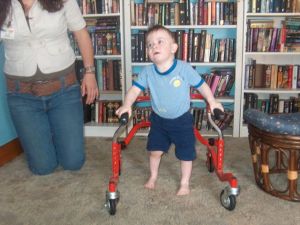
Mason Medlam

“And then I got to know Mason and there was never one second where I would have traded him for a different child without autism, never one second.  Everything he lacked he made up for in some other way.  The absolute beauty, you could just see it in his eyes.  He saw nothing bad in the world. There was nothing bad in the world. And it’s just constant devastation.  It’s a horrific thing to lose your child.”

In the three months since Mason’s death, Medlam has worked as an advocate for safety for children with autism.  “I want him to save all his brothers and sisters that have the same problems and issues that he had,” she said.

Just this year there have been multiple cases of children with autism wandering and drowning. During her presentation, Medlam held up photos of her son and eight other children who died after wandering. The cases below are hauntingly similar.

Click here for an article listing earlier deaths of children with autism due to of wandering.

The proposed Mason Alert is picking up steam, and Medlam hopes that someday, perhaps soon, law enforcement agencies will create a national registry that would contain not only photos and contact information of people at risk for wandering, but their fascinations, locations of nearby hazards such as pools and ponds, how they react under stress, their communication abilities, and how to approach them.

No matter what happens, Mason will go down as a hero for the awareness raised after his tragedy.

Click here for the Examiner.com article about autism wandering and the proposed Mason Alert.  Click here for a video tribute to Mason.

Facilitated Communication (FC): the controversy is over. FC is a valid communication method for some people with autism.

October 10, 2010


An example of a facilitated communication letter board. Photo by Mike Frandsen.


Facilitated communication, or supported typing, has been a godsend for people with autism and other disabilities who are non-verbal or have limited speech, because it enables them to communicate. Here’s an in depth article about FC on Examiner.com.

Many people with autism, who were formerly thought of as retarded, have learned to type independently after first learning to communicate through FC. Those people include Chammi Rajapatirana, Sue Rubin, and Jamie Burke.  Burke learned to speak the words as he types them.

Larry Bissonnette and Tracy Thresher are other FC users who learned to speak the words as they type them.  Their story is told in an upcoming documentary, Wretches and Jabberers.  Here’s a video of Chammi typing independently.

FC is controversial because some studies have concluded that in certain cases the facilitator has led the FC user to letters and words. However, there is a right way and a wrong way to do FC, and if facilitators don’t do the technique correctly, that shouldn’t invalidate the entire method of communication.  The Institute on Communication and Inclusion at Syracuse University, the national leader in FC, has published training standards.

Many people with autism who have learned to communicate through FC have described the ability to communicate as something that makes life worth living, and they liken it to being freed from prison.

Candidates for FC include those who can understand but don’t have verbal communication, and those who need a steadying hand to help them avoid tremor, impulsivity, or help them feel their bodies.

FC can include the facilitator’s hand on the typist’s hand, or on his or her shoulder, back, or even leg.  The role of emotion is important in FC to encourage the FC user, and studies fail to take those intangible factors into consideration.  The facilitator also provides the FC user with verbal feedback.

Many people with autism also have movement difficulties.  For example, most people would assume that if you ask a person to get up off the couch, and the person doesn’t, then either he must not understand you or he is being non-compliant.  But in fact, movement disorders such as apraxia may prevent someone from responding, even though he or she may want to.

The bottom line is that a lack of speech does not equate to a lack of intelligence.

I’ve played Chammi in Boggle about 50 times.  He’s won about 35 of them, and I’m pretty good with words.  The modified form of the game involves pointing to adjacent letters in columns and rows to make words.  A friend of mine, a Cal-Berkeley grad who also has an MBA, split two games against Chammi yesterday.  (Another friend of mine, a Duke grad who is also a lawyer, has beaten Chammi in a few close games)

The strongest case for FC can be summarized in this way:

1.  Many people, formerly called profoundly retarded because of a lack of speech and other difficulties, learned to communicate through FC.

2.  Many of those people who first learned to communicate through FC later learned to type independently. (Some of them learned to speak the words as they type them).

3.  They would not have learned to type independently had they not first learned through FC.

Yet, most of the medical establishment doesn’t approve of FC, meaning that they would rather have these people not communicate at all rather than through FC.  For some people, FC is their only hope of communicating.  Imagine how many people are living lives of isolation, who are intelligent yet presumed to be retarded, and who are not given a chance to communicate.

Click here for the article on Examiner.com.