One of the best activities to do with children with autism during play dates is to read books, as long as it’s done in an engaging, interactive way. At a recent play date I facilitated, I brought a stack of books from my collection – books that I thought would be most likely to be big hits. Then I let the kids choose which ones they were going to read. To my surprise, they chose “The Cat in the Hat” by Dr. Seuss and “Where the Wild Things Are” by Maurice Sendak, which were my favorite books when I was very young. It turned out great. To see the whole list of books that I brought (those about emotions, social skills, humor, etc.), ones that didn’t make the cut, plus links to other articles about books for children with autism, click here for my article on Examiner.com.
Archive for the ‘Disabilities’ Category
Cleaning and organizing in Washington, D.C. and Maryland
November 27, 2010I thought I would post this about a company that uses mostly people with disabilities in cleaning and organizing. I’ve used them before and they’re good. This is cut and pasted from an email:
“My name is Janet Carter and I am the owner of ABC Cleaning Services. This is a new company that employs individuals with disabilities. I am interested in obtaining residential and/or commercial contracts. If you have any questions or are in need of our services, please feel free to contact me. We will be happy to accommodate you in your home or office environment.”
—
ABC Cleaning Services, LLC
Janet Carter
abccleaningservices1@gmail.com
202-526-8028
Mason Alert Take Me Home program will help prevent autism wandering, save lives
November 25, 2010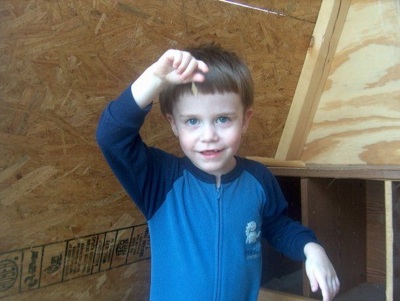
Mason Allen Medlam
Last July, 5-year old Mason Medlam drowned in a pond after wandering from his home. He had autism. Wandering and drowning are leading causes of death for children with autism, who are often unaware of danger, fascinated by water, and unable to communicate.
Mason’s family has proposed the Mason Alert, a national registry of people with autism and other disabilities that would help authorities find them if they go missing.
Plans are underway for the Mason Alert questions to be integrated with an existing police program for autism wandering safety, the Take Me Home program, which contains photos and contact information for approximately 500 children and adults with autism and other disabilities in Pensacola, Florida. Approximately 250 police departments across the U.S., Canada, and England are using the Take Me Home program, which is free to any police departments that want to use it.
The information in the Mason Alert includes not only photos of children and adults with autism along with contact information, but it also lists their fascinations and interests, whether they are verbal or nonverbal, if they have any serious health concerns such as seizures, how they react under stress, how to approach them, and other information specific to the person.
The Medlam family has been raising awareness of autism wandering in the months since Mason’s death.
“Losing Mason was like losing the other half of my soul,” said Sheila Medlam, the mother of Mason. “From the very beginning we shared his story with everybody because we didn’t ever want it to happen to anybody else and we wanted to give some meaning to something so horrible.”
The Mason family also hopes to establish an alert similar to the national AMBER Alert system for missing children, or to include criteria for autism wandering into the AMBER Alert, which currently only covers abducted children.
But for now, Medlam hopes that lives will be saved because of the story of her son, the awareness that has been raised about autism wandering, and the expansion of the Take Me Home program to include the questions in the Mason Alert.
“I think every child that is saved because this is in place is a piece of my son alive,” Medlam said. “When I look in their eyes I see the same thing I saw in my son’s eyes. The same inner sense of beauty and joy and mischief, I see it in their eyes and they’re very, very, very special children and they should be protected by everybody, and with everything we have to protect them.”
For the complete article on Examiner.com, please click here.
Wretches and Jabberers: Best movie of 2011?
November 6, 2010I just got back from a screening of Wretches and Jabberers at the ICDL conference in Tysons Corner, Virginia and the movie was excellent. It follows Tracy Thresher and Larry Bissonnette, two men with autism who communicate by typing, as they travel to visit their peers in Sri Lanka, Japan, and Finland. (Full disclosure – I’ve known Chammi Rajapatirana, one of the people with autism who Larry and Tracy visit in the movie, for a long time).
The movie shows that non-verbal or minimally verbal people with autism are extremely intelligent, funny, and full of emotion. Tracy, Larry, and Chammi didn’t learn to type until they were adults. Tracy and Larry can read some of the words as they type them. It makes you wonder how many people are overlooked, underestimated and living in isolation because of their lack of verbal ability.
The movie passed the bathroom test. That’s when you have to go but you wait until the movie is over because you don’t want to miss even a minute of it.
Filmmaker Gerardine Wurzburg, who was nominated for an Academy Award for Autism is a World, may just win one for this movie.
The documentary comes out in the spring of 2011 and the soundtrack will be released in January. The incredible list of musical talent includes Norah Jones, Carly Simon, Ben Harper, Stephen Stills, and Bob Weir. My favorite song was by Stills, with solid rhythm and bass guitars behind his distinctive voice, which was played when Tracy and Larry were in Vermont in between globetrotting trips.
First ICDL Conference to be held without Dr. Stanley Greenspan Nov. 5-7
November 4, 2010Today through Sunday, the annual Interdisciplinary Council on Developmental and Learning Disorders Conference will be held in Tysons Corner, Virginia, the first conference without Dr. Stanley Greenspan, who died at 68 last spring. Greenspan’s philosophy on bringing out engagement and interaction in children with autism through Floortime and the Developmental, Individual Differences, Relationship-Based model has had an unmistakable influence on the way children with autism are now taught.
Kids today are more likely to be taught in meaningful, real life ways based on their interests, with a greater emphasis placed on emotions and play/social skills, and that’s partly due to the work of Dr. Greenspan.
Greenspan’s attitude toward children with autism can be seen in his book “Engaging Autism,” when he wrote, “The child may have a disorder or a set of problems, but he is not the disorder. He is a human being with real feelings, real desires, and real wishes.”
I wrote an article about Greenspan for Examiner.com after he died. Another site stole the article and cut and pasted it on a blog. Please see the original article, Dr. Stanley Greenspan dies, founded Floortime and developmental approaches to autism therapy here.
Mason Alert would help prevent wandering, drowning deaths of children, adults with autism
October 28, 2010
Mason Medlam, 5, drowned July 27 in a pond after wandering from his home near Colwich, Kansas. Mason was non-verbal and had autism.
Wandering and drowning are leading causes of death for children with autism, who often have limited communication abilities, impulsive behaviors, and a lack of a sense of danger. On July 27, 2010, Mason Allen Medlam, a 5-year old non-verbal boy with autism, wandered away from his home near Colwich, Kansas and drowned in a pond. His family has set up the Mason Allen Medlam Foundation for Autism Safety to prevent future deaths due to wandering, which is a major problem among children with autism. The family is advocating for a “Mason Alert” that would provide authorities with a registry about children who are at risk for wandering so they can be found more easily. You can sign their petition here.
The federal AMBER Alert is only for children who have been abducted, but the Mason Alert would cover children and adults with autism and other disabilities who are at risk for wandering. The Silver Alert is primarily designed for Alzheimer’s patients.
Mason’s mother, Sheila Medlam, spoke in front of the Interagency Autism Coordinating Committee Friday at the National Institutes of Health in Bethesda, Maryland, and told the group, “You have to do something now. Politics shouldn’t be involved. These children, they are gone forever. You don’t have time to wait. You need to do something now.” Members of the National Autism Association also spoke about the problem of wandering and safety.
Medlam described to the group how her son, who was fascinated by water, wandered from the house one day through a window. The Medlams were vigilant about safety. Sheila Medlam said she never slept more than a foot from Mason. The family had multiple locks on every door because they knew Mason was skilled at opening

Mason Medlam
locks. But on this day the temperature was 105 degrees and the air conditioner was broken. Mason got out through a window. A frantic search was unsuccessful and Medlam found Mason drowned in a pond.
Medlam said a registry would have saved Mason’s life by identifying his attraction to water. Authorities would have likely searched around the nearby pond. Instead, Medlam says, they didn’t take her request seriously.
“By the time I pulled him out of the pond, he had only been gone for a few minutes. The police had actually been there for about 15. At any point if they had gone to the pond they could have saved Mason,” Medlam said.
After flying in from halfway across the country, Medlam had her presentation cut short, a bit rudely (although surely no disrespect was intended), by the chairman of the committee because of time constraints. She wasn’t in Kansas anymore. Welcome to Washington. But her speech was extraordinary and compelling, and by the end of the meeting the IACC had voted to establish a subcommittee devoted to safety issues.
Medlam left the room for a while, and I later caught up with her and interviewed her for Examiner.com. She described what a sheer joy her son was, and talked about her favorite memories of Mason. She told of how he looked at the world as a beautiful place, and how he had no fear of danger.
She said when she first got the news that Mason had autism, she was scared.
“I thought it was the worst news in the world,” she said.
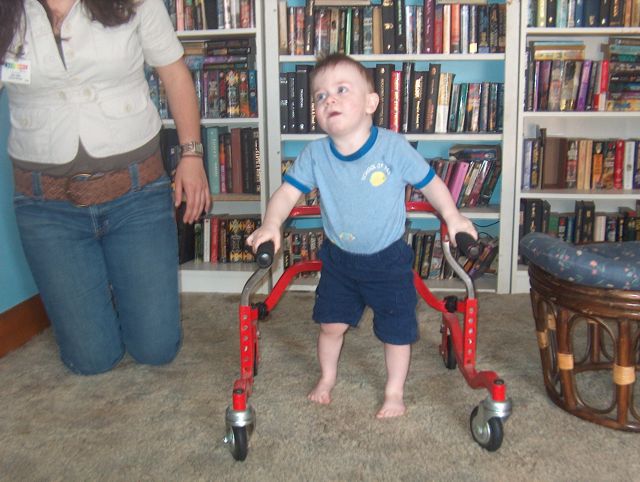
Mason Medlam
“And then I got to know Mason and there was never one second where I would have traded him for a different child without autism, never one second. Everything he lacked he made up for in some other way. The absolute beauty, you could just see it in his eyes. He saw nothing bad in the world. There was nothing bad in the world. And it’s just constant devastation. It’s a horrific thing to lose your child.”
In the three months since Mason’s death, Medlam has worked as an advocate for safety for children with autism. “I want him to save all his brothers and sisters that have the same problems and issues that he had,” she said.
Just this year there have been multiple cases of children with autism wandering and drowning. During her presentation, Medlam held up photos of her son and eight other children who died after wandering. The cases below are hauntingly similar.
- October 7, Salmon, Idaho: 7-year old boy with autism drowns in river after wandering
- September 14, Barling Creek, Arkansas: 3-year old girl with autism drowns in creek after wandering
- Aug 19, Tuscon, Arizona: 5-year old boy with autism drowns in golf course pond after wandering
- August 3, Austintown, Ohio: 7-year old boy with autism drowns at school pool after wandering
- June 27, Bernards, New Jersey: 8-year old boy with autism drowns in pond after wandering
- June 23, LaCrosse, Wisconsin: 7-year old girl with autism drowns in pool after wandering
Click here for an article listing earlier deaths of children with autism due to of wandering.
The proposed Mason Alert is picking up steam, and Medlam hopes that someday, perhaps soon, law enforcement agencies will create a national registry that would contain not only photos and contact information of people at risk for wandering, but their fascinations, locations of nearby hazards such as pools and ponds, how they react under stress, their communication abilities, and how to approach them.
No matter what happens, Mason will go down as a hero for the awareness raised after his tragedy.
Click here for the Examiner.com article about autism wandering and the proposed Mason Alert. Click here for a video tribute to Mason.
EASE: Educate, Advocate, Support, Empower Foundation helps people with autism in Sri Lanka
October 28, 2010
EASE: Educate, Advocate, Support, Empower
My friend Chammi Rajapatirana and his parents moved to Sri Lanka four years ago to start the EASE: Educate, Advocate, Support, Empower (EASE) Foundation devoted to providing facilitated communication (FC) and alternative and augmentative communication training for people with speech impairments. The Rajapatiranas started a small learning center that students with disabilities attend for free. Students are first taught to point to objects with the goal of eventually typing without physical support.
Chammi recently attended the premiere of the documentary Wretches & Jabberers: And Stories from the Road, in Burlington Vermont. The movie, directed by Oscar winner and twice Academy Award-nominated filmmaker Gerardine Wurzburg, who also directed Autism is a World, stars FC users Larry Bissonnette and Tracy Thresher as they travel to visit other people who use supported typing in Finland, Japan, and Sri Lanka, where they visited Chammi. See the trailer here.
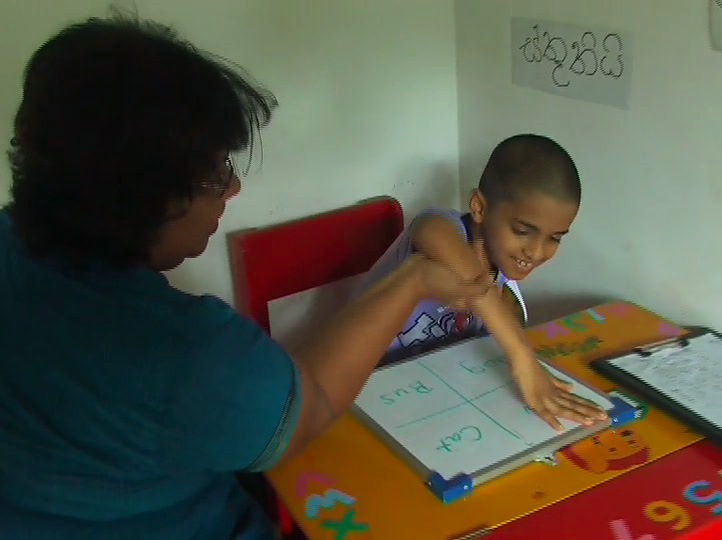
One of the young students at the EASE Foundation.
See a video of Chammi typing independently. For an article about FC on Examiner.com, click here.
Facilitated Communication (FC): the controversy is over. FC is a valid communication method for some people with autism.
October 10, 2010

An example of a facilitated communication letter board. Photo by Mike Frandsen.
Facilitated communication, or supported typing, has been a godsend for people with autism and other disabilities who are non-verbal or have limited speech, because it enables them to communicate. Here’s an in depth article about FC on Examiner.com.
Many people with autism, who were formerly thought of as retarded, have learned to type independently after first learning to communicate through FC. Those people include Chammi Rajapatirana, Sue Rubin, and Jamie Burke. Burke learned to speak the words as he types them.
Larry Bissonnette and Tracy Thresher are other FC users who learned to speak the words as they type them. Their story is told in an upcoming documentary, Wretches and Jabberers. Here’s a video of Chammi typing independently.
FC is controversial because some studies have concluded that in certain cases the facilitator has led the FC user to letters and words. However, there is a right way and a wrong way to do FC, and if facilitators don’t do the technique correctly, that shouldn’t invalidate the entire method of communication. The Institute on Communication and Inclusion at Syracuse University, the national leader in FC, has published training standards.
Many people with autism who have learned to communicate through FC have described the ability to communicate as something that makes life worth living, and they liken it to being freed from prison.
Candidates for FC include those who can understand but don’t have verbal communication, and those who need a steadying hand to help them avoid tremor, impulsivity, or help them feel their bodies.
FC can include the facilitator’s hand on the typist’s hand, or on his or her shoulder, back, or even leg. The role of emotion is important in FC to encourage the FC user, and studies fail to take those intangible factors into consideration. The facilitator also provides the FC user with verbal feedback.
Many people with autism also have movement difficulties. For example, most people would assume that if you ask a person to get up off the couch, and the person doesn’t, then either he must not understand you or he is being non-compliant. But in fact, movement disorders such as apraxia may prevent someone from responding, even though he or she may want to.
The bottom line is that a lack of speech does not equate to a lack of intelligence.
I’ve played Chammi in Boggle about 50 times. He’s won about 35 of them, and I’m pretty good with words. The modified form of the game involves pointing to adjacent letters in columns and rows to make words. A friend of mine, a Cal-Berkeley grad who also has an MBA, split two games against Chammi yesterday. (Another friend of mine, a Duke grad who is also a lawyer, has beaten Chammi in a few close games)
The strongest case for FC can be summarized in this way:
1. Many people, formerly called profoundly retarded because of a lack of speech and other difficulties, learned to communicate through FC.
2. Many of those people who first learned to communicate through FC later learned to type independently. (Some of them learned to speak the words as they type them).
3. They would not have learned to type independently had they not first learned through FC.
Yet, most of the medical establishment doesn’t approve of FC, meaning that they would rather have these people not communicate at all rather than through FC. For some people, FC is their only hope of communicating. Imagine how many people are living lives of isolation, who are intelligent yet presumed to be retarded, and who are not given a chance to communicate.
U.S. apologizes for infecting Guatemalans with syphilis in 1940s. Related news: The Tuskegee Experiment; the Age of Autism
October 1, 2010The U.S. government has said it is sorry for using prostitutes to infect prison inmates in Guatemala with syphilis in the 1940s. Researchers were testing how effective penicillin was in treating syphilis. It’s an example of the government sacrificing people for the health of the entire herd.
The medical establishment’s research on and treatment of syphilis has a strange history. Between 1932 and 1972, the U.S. government experimented on 400 poor black men from Alabama who had syphilis. This became known as the Tuskegee Experiment. The men were never told they had syphilis and were not given penicillin, the standard treatment for the disease. Many of the men died from the disease or from complications of it, while some of the men gave the disease to their wives and had children with congenital syphilis.
From the late 15th century for several hundred years, mercury, one of the most toxic substances in the world, was used by doctors as a treatment for syphilis in Europe and then in the U.S. While mercury killed bacteria, it had serious, often deadly side effects.
The use of mercury to treat syphilis in the past is explored by authors Dan Olmsted and Mark Blaxill in their new book, Age of Autism: Mercury, Medicine, and a Man-made Epidemic. Olmsted, an award-winning journalist, and Blaxill, a Harvard-educated parent of a child with autism, discuss mercury in medicine, vaccines, pesticides, and fish, and the element’s toxic effects on humans. They describe how the medical establishment has used mercury to treat ailments, but ignored its side effects, which often mimic autism.
I interviewed Olmsted and Blaxill for Examiner.com last month. Here are some excerpts from the interview about mercury and syphilis, as syphilis is back in the news. Click here for the whole interview.
Mike Frandsen: You trace the medical establishment’s use of mercury to treat illnesses in the last several centuries. Why did doctors continue to use mercury even after they discovered it was toxic?
Dan Olmsted: I think one answer to that is that it seemed to work when nothing else really did. Mercury is a biologically active compound. If you have sores on your body, which you would get from syphilis, and you rub a mercury salve on it, the sores would clear up and seemingly that was a good thing. Unfortunately, the side effects were longer to show up and more obscure.
And what we see is a pattern where because it seemed to be useful to doctors in treating desperate patients, they would do it for a while and then when a better treatment came along they would quit using it and never look back and realize or acknowledge that they might have been killing people by the thousands even as they were treating them. It just kind of kept going, where we are still at a point where although we wouldn’t use arsenic or plutonium or lead or any toxic compound in medicine or as medicine, we still use mercury. And it has gotten a free pass for several hundred years and that we think really needs to stop.
Mercury was used to treat syphilis for hundreds of years. What happened to those patients?
Mark Blaxill: Mercury was used from the beginning of the syphilis epidemic in Europe from the late 15th century. Mercury was used as an ointment, a skin treatment, but over time, the idea was to try to get mercury closer to the infection or the site of the infection and not just on the skin. In the 1700s and 1800s people first started the practice of internal administration of mercury, specifically mercuric chloride, and doctors first began encouraging patients to drink it, and then not longer after, they started injecting mercuric chloride into syphilis patients.
Interestingly enough, when they started this internal administration approach to treating syphilis, a new, invariably fatal form of neurosyphilis, brain syphilis, began to emerge as well, something called general paralysis of the insane (GPI). These patients would go stock raving mad, wild and crazy with delusions and they would generally die quite quickly. These cases of GPI occurred in places where mercury treatments were common, and where the practice of treating patients with mercury chloride and mercury in general was not used, you would never see these cases of GPI.
If mercury is one of the causes of autism, and syphilis patients and children given teething powders were exposed to mercury, why didn’t they get autism?
Mark Blaxill: Syphilis patients were adults and so the exposure they had to mercury came much later in life. Autism is really a neurodevelopmental disease and it occurs in children very early in life. Once your brain is fully developed the exposure to mercury won’t have the same kind of effect.
Click here for the whole interview.
U.S. government compensated more vaccine injury or death claims for old DTP (diphtheria-tetanus-whole cell pertussis) vaccine than for any other vaccine
September 29, 2010Whooping cough cases caused by pertussis have increased in the U.S. in recent years, and articles have urged parents to vaccinate their children against the disease. However, the articles fail to mention the extent of some of the side effects of the vaccines.
In the last 20 years, the U.S. government compensated vaccine victims for injury or death claims 1,265 times for the old DTP (diphtheria-tetanus-whole cell pertussis) vaccine. That’s more than four times as many claims compensated than for the vaccine that resulted in the next highest number of claims compensated, the MMR (measles-mumps-rubella) vaccine (304 claims compensated).
In 1991, the FDA approved acellular pertussis vaccines DTaP (diphtheria-tetanus-acellular pertussis), which are much safer than the old whole cell pertussis vaccines. The U.S. government only compensated 101 claims for injury or death for the DTaP vaccines, first phased in in 1991 to go along with the DTP vaccine. Other acellular pertussis vaccines were phased in later in the 1990s.
Vaccineinformation.org states that “Although DTaP vaccine does not cause neurological disorders, receiving the vaccine can cause an already-present underlying condition to show itself.” This means that if a neurological disorder results from the vaccine, the child’s susceptibility to the disorder is blamed, even if that susceptibility would not have been triggered or manifested without the vaccine. This is a similar argument used in the Hannah Poling case, in which the government conceded that vaccines caused Hannah’s autism, but blamed an underlying mitochondrial disorder.
(As for the autism-vaccines debate, you can read about it in this interview on Examiner.com with the authors of the new Age of Autism book. Another autism expert blames chemicals.
Essentially, the CDC says the vaccines are safe, except for cases in which infants and children get severe, sometimes permanent reactions, which only happen rarely. Wording on the CDC website states that the vaccine reactions are worth it to preserve herd immunity. If the CDC were a person in court, it would likely not be given much credibility because of misleading statements.
Adverse events that can occur that the government compensates victims for after pertussis antigen-containing vaccines (e.g., DTaP, Tdap, DTP, P, DTP-Hib) include:
| Anaphylaxis or anaphylactic shock 1 | 0-4 hours |
| B. Encephalopathy (or encephalitis) 2 | 0-72 hours |
| C. Any acute complication or sequela (including death) of above events 4 |
A “sequela,” according to Wikipedia, is a pathological condition resulting from a disease, injury, or other trauma. The VICP defines it as “a condition or event which was actually caused by a condition listed in the Vaccine Injury Table.”
Encephalopathy includes seizures and mental or neurological changes.
The following statistics are from the Health Resources and Services Administration Vaccine Injury Compensation Program website.
Vaccines with highest number of claims of injury or death compensated by U.S. government since 1989:
| Vaccine(s) | Filed | Compensated | ||
| Injury | Death | Total | ||
| DTP
(diphtheria-tetanus-whole cell pertussis) |
3,282 | 696 | 3,978 | 1,265 |
| MMR (measles-mumps-rubella) | 814 | 52 | 866 | 304 |
| Hepatitis B (Hep B) | 555 | 48 | 603 | 171 |
| Influenza (Trivalent) | 476 | 29 | 505 | 170 |
| OPV (Oral Polio) | 280 | 27 | 307 | 157 |
| DTaP
(diphtheria-tetanus-acellular pertussis) |
291 | 74 | 365 | 101 |
| Pertussis | 5 | 3 | 8 | 2 |
| TOTAL | 12,468 | 1,044 | 13,512 | 2,529 |
Note: “Pertussis,” in italics above listed by itself, only resulted in two claims for injury or death compensated by the government. It is unclear if that means the pertussis vaccine alone is safer than the one combined with other vaccines.
Of the vaccines in the table above, those that contain pertussis also have a much higher percentage of claims filed that involve death than those that involve just injury.
Obviously this isn’t to say don’t vaccinate – it’s just to let people know as much information as possible. Those who write that vaccines are safe when the government has compensated 2,529 claims for injury or death from vaccines, either are lying or just don’t understand the whole issue.
There are people, by the way, who believe that it is a necessary and acceptable risk for some children to die or be permanently injured so that the vast majority may benefit from vaccines.
 Mike's Blog